Review of the Arrow Films box set Years of Lead: Five Classic Italian Crime Thrillers, 1973-1977 (Mario Imperoli, Like Rabid Dogs; Vittorio Salerno, Savage Three; Massimo Dallamano, Colt 38 Special Squad; Stelvio Massi, Highway Racer; Vittorio Salerno, No, the Case is Happily Resolved)
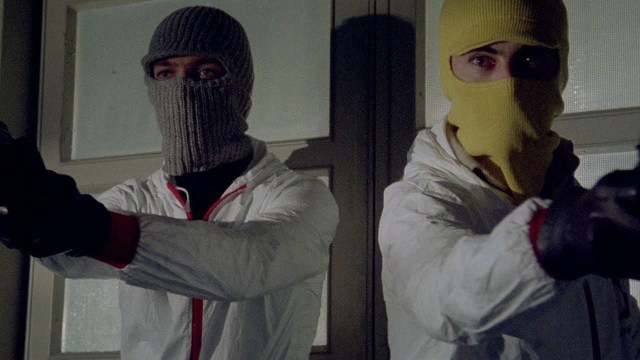
Mario Imperoli’s Like Rabid Dogs opens with a brutal armed robbery that takes place in the bowels of Rome’s Stadio Olimpico during the 1976 Serie A play-off between Lazio and Sampdoria. This was a violent relegation fixture that was also the first football match in Italian history to be patrolled by carabinieri with German shepherd dogs. Imperoli recycles television footage of the actual match, focusing on Luciano Re Cecconi, Lazio’s star centre, who would be shot dead a year later by the owner of a jewelry shop in Rome — “a victim of the same violence we see in the movie,” as the film critic Fabio Melelli puts it. Lucio Fulci once claimed that “violence is Italian art” and Like Rabid Dogs is a very Italian aestheticization of violence. It is a pure product of an imploding society.
The films in Arrow’s Years of Lead: Five Classic Italian Crime Thrillers, 1973-1977 trace a direct lineage to the 1960s crime thrillers of Carlo Lizzani and the American models of Dirty Harry and The French Connection, but they can also be viewed as the joint offspring of Hercules and Rome, Open City: genre films that exploit the tools of neorealism. This was partly a matter of politics and partly technique. Like Rabid Dogs is filled with spectacular car chases staged in the middle of Rome without permission from city authorities. This was the same year that Ruggero Deodato shot the infamous motorbike pursuit that opens Live Like a Cop, Die Like a Man in the middle of the Roman rush hour. Like Lizzani, Deodato began his own career as an assistant director to Roberto Rossellini and he would later combine the tricks of neorealism with the excesses of the mondo documentary in Cannibal Holocaust. The effect of this was to blur the boundaries between fantasy and reality, but this was just an extension of what was happening anyway: ‘Italy’ in the 1970s was nothing more than a series of linked fictions, a web of conspiracies, speculation, illusion and lies. The anarchy and lawlessness that Imperoli and Deodato put on screen did not simply represent what was happening: it was an integral part of how these films were actually made.
Like Rabid Dogs was loosely based on the 1975 Circeo massacre and, like Vittorio Salerno’s 1975 shocker Savage Three, it was also infused with the spirit of A Clockwork Orange. For Salerno, Turin was the symbolic city of the Italian crisis. Home of Fiat and the Agnelli network, Red Brigade terror and wildcat strikes, the city was a victim of its own history, both resented and envied, a racially and socially charged conflict zone. The reality of Italian unification was the ‘Piedmontisation’ of the peninsula which was bitterly resisted in the South; by the 1970s, in the wake of the Economic Miracle and the great migration, Southern workers had become a despised and teeming underclass in the Northern cities. This gave Salerno the perfect stage for an outburst of nihilistic violence perpetrated by a pair of slowly unravelling psychopaths who work in a computer processing plant on the outskirts of the city and a Sicilian migrant who feels the full force of Northern racism while living with his extended family in an overcrowded apartment. Like the Parondis in Visconti’s Rocco and his Brothers, they are dangerously alienated and adrift, moral voids who find release and perverse camaraderie in random acts of extreme violence. In Savage Three Turin looks like a city that has been defeated: the football stadium, streets, piazzas, boulevards and even the modern office blocks are visibly broken, exhausted, unclean, and crumbling. Salerno’s Turin has nothing in common with the haunted Art Nouveau suburbia of Profondo Rosso or the Baroque decadence of The Sunday Woman. It is, instead, a grim urban sprawl that is also a human trap: a dead space that only produces hatred, conflict and murder.
Every frame of Savage Three looks depressed, drained, in line with the common visual tone of the poliziotteschi cycle. In these films, the sky is invariably blank and grey, a featureless ceiling of drab cloud that creates a simultaneously flat and oppressive atmosphere; the saturated colours of the gialli and the seductive monochrome of neorealism are replaced by an ugly, washed-out tonal range. The poliziotteschi city is a bleak, malignant place, where all human relations are negative and most human interactions are violent. Fernando di Leo’s Milan is not defined by its neoclassical arcades or the Duomo di Milano, but by rotting ghettos that run alongside the canals, grey rain-drenched piazza tiles and warehouses where corpses wait weeks to be discovered. Umberto Lenzi’s Rome is not the city of romantic weekends and ancient ruins, but a dirty and congested labyrinth of squalid flats, dank alleys, damp staircases, bleak wasteland and scrappy tenement rooftops, settings for various acts of torture, rape and murder. Enzo G. Castellari’s Genoa is perhaps the most desperate of them all: a terrifying, feral, decadent city, rotten with vice and corruption, festering on the edge of the Ligurian sea.
The fate of Italy’s cities in the 1970s is encapsulated by some of its most famous crime titles: Fernando di Leo’s Milano Calibro 9, Marino Girolami’s Violent Rome, Lenzi’s Gang War in Milan, Rome Armed to the Teeth and Violent Naples. The cities are the focal point of Italy’s crisis: the piazzas and train stations are bombed and the banks are robbed, while criminal gangs and rogue policemen rule the streets and citizens are terrorised by random acts of slaughter. Perhaps the definitive Italian crime title is the one that Sergio Sollima gave his 1970 hit man melodrama, Città violenta, even though that film is set in New Orleans. The cities are violent places that condition their inhabitants to commit more violence: an endless, animalistic cycle that Salerno depicts so well in Savage Three.
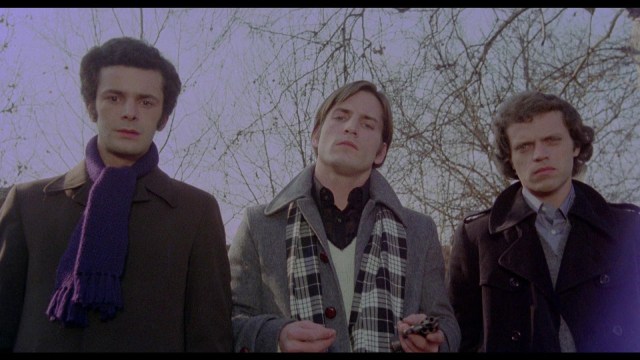
In Massimo Dallamano’s Colt 38 Special Squad the motivation for the crime is even more ambiguous than Imperoli and Salerno’s films. At first the operation planned by ‘the Marseillaise’ seems like a simple case of common theft, albeit conducted on a grand scale. But, as Rachael Nisbet points out in her accompanying essay to the Years of Lead set, there is something more sinister at work:
While the motivations of the common criminal are clear, the Marseillaise is a more complex individual; a man driven by a certain sense of madness and anarchic glee…his perverse sadism and disregard for life suggest that his actions are motivated by something far darker than the driving factors of vengeance and retribution…
Salerno’s ‘savage three’ and ‘the Marseillaise’ are all nihilists, but ‘the Marseillaise’ has more ambitious plans: he wants to inflict a grievous wound on Turin and live to see it. Avarice, vice and power worship do not adequately explain this instinct. This is more than simply a plot point, or an absence of one: it taps into the atmosphere of uncertainty that defined the atrocities of this period and was never adequately resolved.
The Italian political culture of the 1970s was so convoluted and secretive that when Henry Kissinger claimed that he did not understand it nobody thought he was joking. In 1988, the Italian state set up the Commissione Stragi (‘The Slaughter Commission’) tasked with uncovering the truth behind the bombings that occurred between 1969-88 and were variously attributed to the Red Brigades, anarchists, neofascists and the CIA. Predictably, it failed to remove the opacity of the period or provide any real psychological closure. The scenes of carnage that follow the bombings of Turin railway station and market in Colt 38 Special Squad stand out for their graphic brutality and emotional poignancy. Dallamano shot the film only four years after the Piazza Fontana bomb and these scenes pierce his movie like unmediated expressions of national post-traumatic stress: they were not shot for thrills, but carry a lot of psychological weight and evoke still raw memories. What can’t be answered in the film, and could never be effectively answered in real life, is the reason for all of this destruction and cruelty. The Slaughter Commission could not solve it and Dallamano refuses to provide a neat conclusion in the character of ‘the Marseillaise’. The ambiguity of the violence and the veil that fell over the most extreme events that ripped through Italy in the 1970s are a central part of the poliziotteschi world view: if nobody can fully account for this violence, then perhaps it is simply endemic to the fragile and conflicted Italian nation, something that can never be solved.
But Colt 38 Special Squad also fulfills another function common to these films: it provides a psychological outlet, a form of mass catharsis. The disintegration of Italian society was intensified by the prominent role of organised crime, black markets and corruption in a free falling economy. The Italian crime films gave voice to the pervasive feeling that the Italian authorities had fallen behind the criminal gangs, even if they were not already hopelessly compromised by them. Fear and helplessness combined with anger; the films responded with bleak cynicism and tales of rough justice. Quite often the stories revolve around detectives or special units within the police force going rogue, using unorthodox and even illegal methods in order to catch or destroy criminal antagonists. The Special Squad in Dallamano’s film is put together to crush the crime wave that has tipped Turin into near anarchy; they are given licence to use Colt 38 revolvers and pursue their targets with freedom that stops short of murder (or is supposed to). It is only by going beyond the limits of legal authority that ‘the Marseillaise’ is finally stopped. In a similar vein, Stelvio Massi’s Highway Racer pays homage to Armando Spatafora, a member of Rome’s Squadra Mobile whose 1960s exploits were legendary. In the film the young Squadra Mobile driver Marco Palma soups up a boxy Alfa Romeo and demands a Ferrari from his boss, the Spatafora doppelganger Tagliaferri, because “I don’t want to lose before I begin.” Retaking the advantage is key and requires special measures. Maurizio Merli excelled at playing rogue cops like Commissioner Betti and Inspector Tanzi in Umberto Lenzi’s frantic and stylish films Rome Armed to the Teeth, Violent Naples and The Cynic, the Rat and the Fist, characters that pushed their job description beyond law enforcement into the realms of vigilantism. The poliziotteschi gave Italians an alternative reality in which cops redressed the apparently unlimited power of organised crime in order to redeem Italian society as a whole.
But they also provided a troubling critique and quite often without any release or redemption. Italy in the 1970s was paralysed by corruption and this was more insidious than terrorism and crime because it undermined any sense of security in state and local authority and, even, the reality of appearances. Salerno’s No, the Case is Happily Resolved is the one entry in the Arrow set that focuses on this total breakdown in trust, with a narrative so pure in its inexorable and dire logic that it almost presents a parable for the Italian crisis. The corruption in this case is psychological and sexual: at the opening of the film Professor Eduardo Ranieri, a quiet and respectable maths and physics teacher, brutally beats a Roman prostitute to death in a reed bed outside of the city. Fabio Santamaria, a young working class man who witnesses the murder, eventually finds himself framed, arrested and jailed for the crime after a relentless series of misjudgments that echo the fate of Richard Blaney in Alfred Hitchcock’s Frenzy. Santamaria makes the fatal decision not to report the crime and to try to cover up his presence at the scene, largely because he distrusts and even fears the police. This instinct proves correct, as they believe Ranieri because of his position and his appearance and jail Santamaria after a cursory investigation. The authority figures in Salerno’s film either conceal their true identity or cannot be trusted to do their jobs safely. All certainty is therefore undermined and Italian society is shown to be based on deception and illusion, a place where reality is inverted and nobody is secure.
The Italian crime films of the 1970s did not just reflect their own society, they made an active contribution to the atmosphere and dynamics of the Italian crisis. The poliziotteschi cycle played out in the shadow of real and relentless atrocities committed by political and criminal groups and state actors. The films did not always or necessarily comment on any of this, but political violence and social disintegration were part of their visual and thematic fabric. All of this occurred at a time when, as Emilio Gentile put it, “Italians were experiencing a mass anthropological revolution in their attitudes and behaviours” and the state was being contested by the existential conflict between Catholicism and Communism. In this context, popular culture had a crucial role to play in shaping narratives, ideas and emotions on a large scale and Italian artists seemed to instinctively grasp this. It so happened that the Italian crime films of the 1970s had a more profound and immediate understanding of their world than any of the more fêted cultural products of the time. The importance of Arrow’s Years of Lead set is that it recognises this and values the films at their true worth.
 Oliver Craner